How to Get Better at Vertical Jumpers

How to get better at vertical jumpers
The advice on how to get better at vertical jumpers travels well because the genre keeps repeating the same readable problems: moving ledges, mean springs, spikes dressed as safety, and that quiet panic when you realise you climbed too fast to recover. Whether you chase a solo high score or play three-player survival, the skills overlap. This guide is genre-wide; Inklets appears only where multiplayer changes the read.
What “getting better” means in a vertical jumper
Improvement is not one reflex stat. On mobile climbers, progress usually looks like earlier reads, calmer recovery after a bad bounce, honest risk on coin detours, and restart discipline so you learn from the death screen instead of autopiloting another run.
If you are new to the category, skim endless jumping games on mobile for why the loop hooks before you drill technique. If you already know Doodle Jump but want company on the ladder, Doodle Jump multiplayer explains how live rivals change timing.
Build a scan pattern: top, middle, feet
Most deaths come from watching your character’s feet while the threat sits two ledges higher.
Read the top third
Spot monsters, projectiles, or ceiling hazards before you commit sideways.
Track the middle band
Land on the next platform and preview the one after it.
Check your feet last
Breaking, sliding, or spiking ledges punish late notice.
On tilt controls, micro-corrections belong in the middle band; big panic tilts belong nowhere. If motion makes you queasy, switch to tap before you blame skill. Many titles let you change scheme in settings; pick the scheme that lets you keep scanning.
Learn platform types as a language
Vertical jumpers teach hazard vocabulary over time. Learn the behaviour families; the skin variants do not matter.
- Static ledges are rest notes; use them to rebuild your scan.
- Moving ledges demand lead time; aim for where the platform will be, not where it is.
- Breaking ledges punish greed; commit or skip early.
- Sticky surfaces change jump timing; expect a slower release.
- Springs and jets trade height for control; plan the landing before you trigger them.
Classic solo jumpers in the games like Doodle Jump cluster are a low-noise place to practise this vocabulary before netcode or chaos events stack on top.
Recovery beats perfection
New players often restart mentally after one ugly bounce. Better players treat ugly bounces as data.
- Land on the widest safe ledge even if it costs height
- Stop coin chasing after two bad detours in the same run
- Climb back toward the centre column after a risky grab
Height without control is fake progress. In multiplayer survival, falling behind is fine until the bottom starts to close in. Ink, lava, or a closing camera pushes trailing players into riskier lines, so plan for that before you chase a coin at the edge.
Coin discipline: when detours help and when they grief you
Coins tempt sideways jumps because designers place them just off the safe line. That is the point.
Solo high-score runs: detour when you still have vertical margin and the next safe ledge is obvious.
Multiplayer runs: detour when rivals took the safe line and you need relative height before bottom pressure punishes the pack. Multiplayer jumping games on mobile covers when live lobbies change priorities.
If coins feed a collection loop in your game, the read timing is the same whether you care about unlocks or not.
One-more-run discipline without burnout
Vertical jumpers sell “one more run” honestly. Short sessions improve you faster than three-hour grinds on a commute.
Try this session shape. Play three runs with one focus: reads, recovery, or no coin detours. After each death, write one short note naming the platform type that killed you. Then stop on a small win.
Party nights differ: if friends are waiting, prioritise readable safe lines over hero jumps.
Multiplayer reads: play relative, not absolute
When two other climbers share the page, your line is only good compared to theirs.
Three extra habits:
- Glance at rival height before risky springs.
- Let chaos events reposition the pack instead of fighting every monster mid-air.
- Treat trailing as temporary until an eliminator makes it lethal.
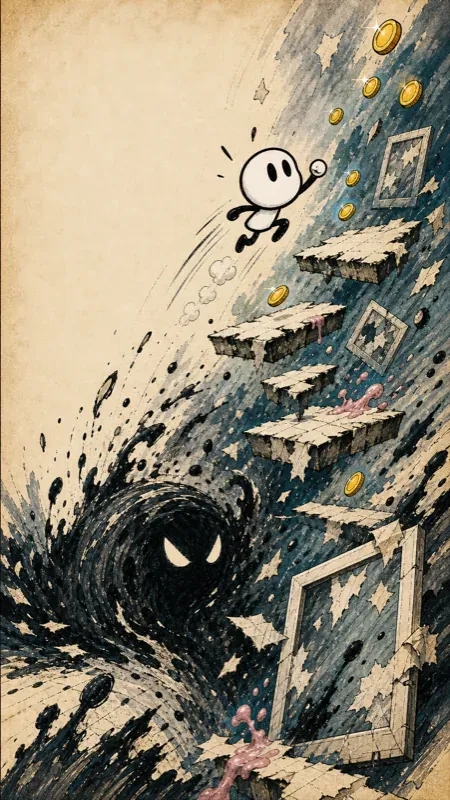
Inklets is a three-player, last-one-standing climb on one sketchbook page, with ink rising from below. The controls match solo jumpers; the extra layer is relative position. It is not released yet, so the Inklets waitlist guide is the place to start; the browser sample shows the feel today.
Practice tools: demos, slow platforms, and classic solo titles
You do not need the hardest game to learn reads.
- Classic solo jumpers isolate platform language without netcode noise. The Doodle Jump family remains the reference cluster linked above.
- Browser samples lower install friction when a studio offers them. Inklets has a browser sample at game.inklets.app for a quick feel while the iOS and Android release is in the waitlist phase.
- Icy Tower and its mobile versions reward combo pacing if you want a higher ceiling once the basics land.
Honest alternatives when skill guides are the wrong tool
- If you dislike the genre entirely: runners and puzzle games use different muscles; forcing a jumper will feel like homework.
- If you only want social chaos without skill growth: party collections beat serious climb practice.
- If motion sickness blocks tilt: change control scheme before you buy boosters or skins.
Strong next step
Pick one focus for tonight: scan pattern, platform vocabulary, or recovery. Play three runs, write one death note per run, then revisit the mechanic that matched your deaths (moving ledges, springs, or bottom pressure). When you are ready to test reads against live rivals, join the waitlist at inklets.app for the release.
Frequently asked questions
Do vertical jumper tips work across different games?
Yes for reads, recovery, and risk timing. Exact jump heights and control schemes vary by title.
Is tilt or tap better for learning?
Neither is universally better. Tap can feel steadier on bumpy commutes; tilt can feel faster once calibrated. Switch if you feel sick or overshoot ledges.
Does multiplayer make vertical jumpers harder?
Socially, yes: rivals compress decision time. Mechanically, controls are the same; relative reads add pressure.
Can I practise before playing Inklets?
Use solo jumpers for platform language and the Inklets browser sample at game.inklets.app for a feel of the shared page. The full three-player game is planned for iOS and Android, with the waitlist at inklets.app.
Related reads.
 doodle jump multiplayer
Doodle Jump Multiplayer: What Exists Today
Can you play Doodle Jump multiplayer with friends? Here is what Lima Sky shipped, why racing isn't the whole answer, and what a survival climber adds.
 ai character creator
AI Character Creator Games: From Slider Menus to Text Prompts
AI character creator games let you describe a character instead of assembling one. How prompt-based creation works, and how Inklets builds it into play.
Download Inklets on iOS and Android: Install, First Launch, and Your First Race
Install Inklets on iPhone or Android, open the app, meet the three-player lobby, create an Inklet, and know what to expect in your first climb.